.jpg)
Two weeks after a load is delivered, the questions come in.
- Was it the right job?
- Who signed for it?
- What time did the driver arrive?
- Was the material placed where the customer expected it?
- Can someone send a photo?
The ticket is the first place everyone looks, and it should be. A material ticket is one of the strongest records in the operation because it captures the truck, product, customer, quantity, location, and transaction details that matter at the scale. But the ticket is not the full delivery story.
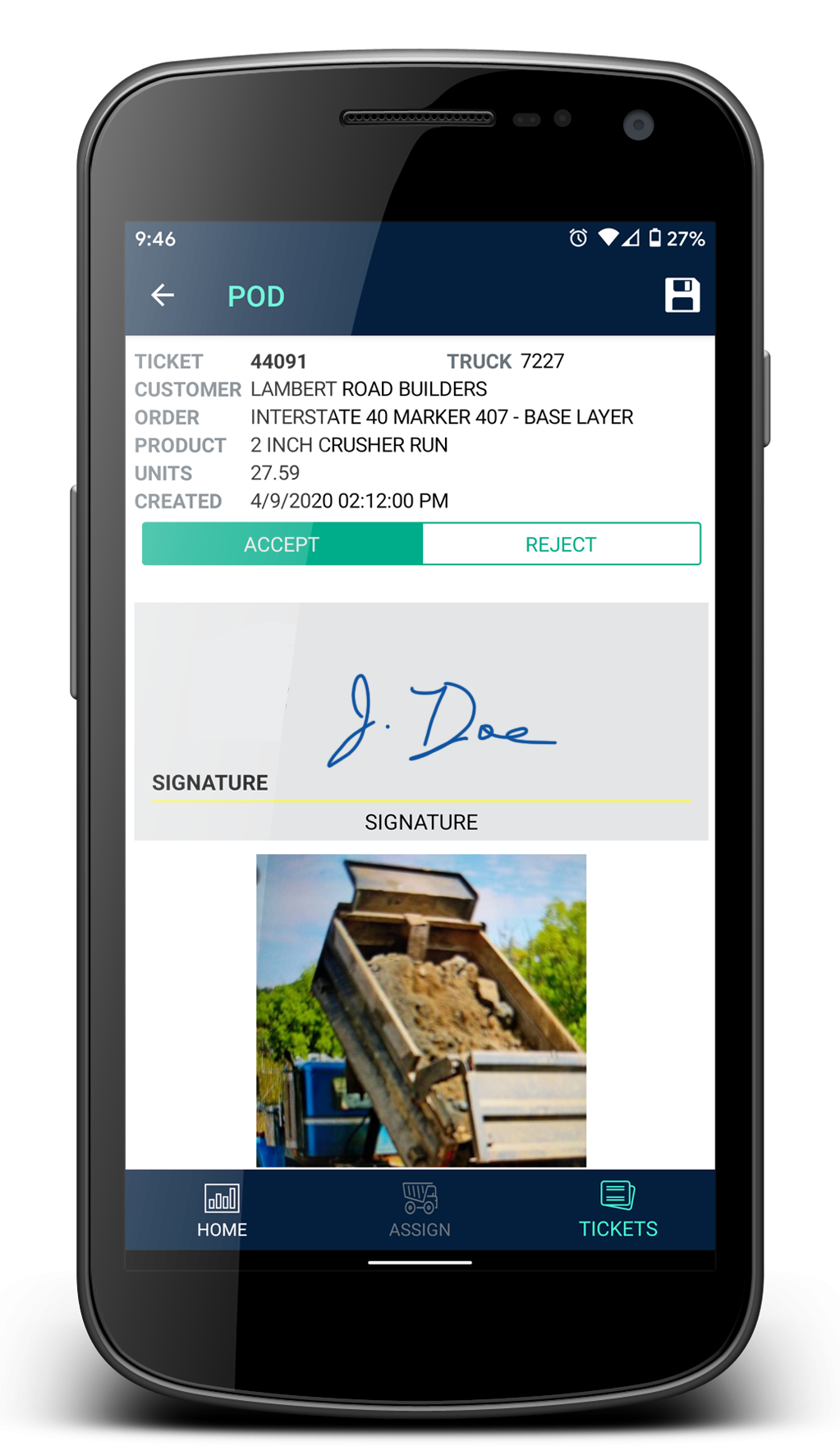
Some of the most useful details happen after the truck leaves the plant. A jobsite signature, a photo of the delivered material, a GPS location, a timestamp from the field, or a project reference may not seem urgent while the truck is moving. Those details become important later, when a customer asks a question or the billing team needs backup. If those details live in texts, paper notes, camera rolls, or driver memory, the team has to reconstruct the delivery. That takes time, and it usually pulls in more people than it should.
Proof of Delivery closes the information gap by keeping field information connected to the material record.
With Fastweigh Proof of Delivery, drivers and field teams can capture delivery details from a mobile device and make them available in the Fastweigh Portal for viewing, reporting, billing, and follow-up. Instead of asking who remembers what happened with a load, the team can start with what the record shows.
That is a better starting point. It gives the office, the field, and the customer a shared source of truth. The load does not end at the scale, and the record should not end there either.
.jpg)