

.jpg)
A scale ticket may start at the scale house, but it does not end there. That one ticket can affect billing, reporting, customer balances, job costing, inventory, tax handling, and more. In a bulk material operation, the ticket carries some of the most important data in the entire operation:
- Customer
- Product
- Truck
- Order
- Job number
- PO number
- Weight
- Price
- Taxes
- Date and Time
- Plant location
- Delivery location
- Driver
- Scale Operator
- Etc.
If any of that information is disconnected from the rest of the business, the impact spreads quickly. Every department ends up doing extra work after the load is already gone. After operators move trucks through the scale, accounting has to clean up the details later. Managers wait on reports with accurate data so they can make decisions for the operation. Customers ask for answers that require someone to track down information from multiple places. A pricing issue can turn into an invoice correction. A customer balance issue can go unnoticed until after another load has already left the yard.
Connected workflows reduce rework
When ticketing is connected to the rest of the operation, your team spends less time copying, checking, and correcting information. The scale house can move quickly while the back office gets clean data from the start.
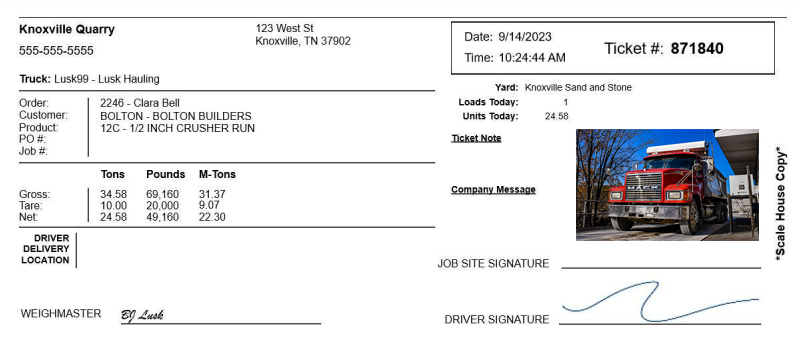
That does not mean every process becomes automatic overnight. It means the operation has a stronger foundation. The information captured at the scale can support the workflows that come after it.
Here's how a modern bulk material operation should look:
- The scale house captures the correct ticket details at the point of transaction.
- The back office receives accurate data without needing to rebuild any part of the ticket manually.
- Managers and Owners get more reliable reporting across customers, products, jobs, and locations.
- Customers receive accurate invoices, statements, and account information. This means they can pay quickly with no fuss.
The takeaway
Connected and automated ticketing gives managers a clearer view of what is happening across locations, customers, products, and jobs. It also helps accounting, dispatch, sales, and plant teams work from the same information instead of each department building its own version of the truth.
Instead of separate teams maintaining separate records, everyone works from the same operational foundation. Time saved. Energy conserved. Productivity improved with every single load.
That's the Fastweigh promise. Give us a try.
.jpg)
.jpg)
.jpg)